A Gentle Light Gone Too Soon: The World Mourns Pope Francis, Dead at 88 Just One Day After Easter
A Gentle Light Gone Too Soon: The World Mourns Pope Francis, Dead at 88 Just One Day After Easter
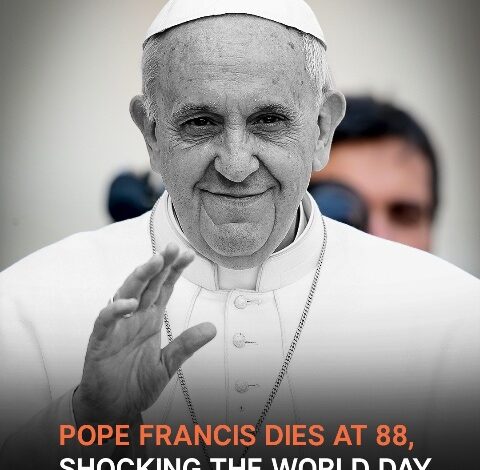
In a heartbreaking turn of events that shook the world, Pope Francis passed away on Easter Monday, April 21, 2025, at the age of 88. His death came just one day after the joyous Easter celebrations, casting a sudden shadow over what is typically one of the most hopeful days in the Christian calendar.
The Vatican confirmed the news early Monday morning, announcing that Pope Francis died peacefully in his residence at Casa Santa Marta, within the Vatican walls. The serene setting of his final moments is perhaps fitting for a man whose papacy was characterized by simplicity, empathy, and a deep concern for the marginalized.


A Legacy of Compassion and Reform
The death of Pope Francis marks the end of a papal era that broke many molds. Born Jorge Mario Bergoglio in Buenos Aires, Argentina, in 1936, he became the first pope from the Americas, the first Jesuit pope, and the first to take the name “Francis” — a nod to Saint Francis of Assisi, known for his devotion to humility and care for the poor.
From the moment of his election in 2013, Pope Francis captured global attention. Unlike many of his predecessors, he chose not to live in the Apostolic Palace but instead remained in the more modest Casa Santa Marta. This small but meaningful decision set the tone for a papacy grounded in authenticity.
Throughout his time as pontiff, he consistently advocated for the environment, interfaith dialogue, economic justice, and inclusion of those often sidelined by society, including refugees, the disabled, and the LGBTQ+ community.

A Final Public Appearance: Hope Amid Decline
Despite growing concerns about his health over the past year, Pope Francis continued to serve as a spiritual leader and global voice. Just two weeks before his passing, he surprised the world with a rare public appearance in St. Peter’s Square — his first since a recent hospital stay. While his frailty was evident, his presence brought joy and hope to many, a testament to his enduring spirit and commitment.
Observers noted that he seemed aware of his declining health but remained steadfast in his duties. His words during that appearance were humble and grateful, a quiet farewell wrapped in pastoral calm.
A Global Shockwave of Grief
The news of Pope Francis’ passing spread quickly, sparking an immediate outpouring of grief across continents. From bishops and heads of state to ordinary citizens, tributes flooded social media and news outlets, reflecting the deep emotional impact of his death.
In Rome, churches tolled their bells in mourning. Pilgrims, tourists, and citizens alike gathered outside the Vatican, many in tears, some lighting candles or laying flowers. For many Catholics — and indeed for countless non-Catholics — Pope Francis had become more than a religious figure; he was a moral compass in turbulent times.
The Vatican’s official statement was brief yet powerful: “Pope Francis died on Easter Monday, April 21, 2025, at the age of 88 at his residence in the Vatican’s Casa Santa Marta.”

A Pope of the People
What made Pope Francis beloved by so many was his rare ability to connect with people regardless of their beliefs. He was as likely to wash the feet of prisoners on Holy Thursday as he was to meet with world leaders. He chose connection over grandeur, listening over lecturing, and mercy over judgment.
He championed global causes — speaking against climate change, war, and economic inequality — with urgency and moral clarity. At the same time, he never lost sight of the individual human being, always choosing to engage, embrace, and encourage.
His use of social media was equally groundbreaking. Through short, heartfelt messages, he reached millions, often reminding people to be kind, to forgive, and to care for one another.
The Final Days
Though the Vatican had not shared many details about his health in recent weeks, it was widely known that Pope Francis had faced multiple hospitalizations and surgeries in the past few years. Reports indicated he had been under close medical supervision recently but continued to fulfill his papal duties as best as he could.
The decision to remain in Casa Santa Marta, even in his final days, reflects his enduring choice to live and die with humility.

The End of an Era
Pope Francis leaves behind a Church changed — one still navigating internal tensions but undeniably influenced by his progressive tone and open heart. His papacy won’t be remembered for grandeur or doctrinal rigidity, but for its radical empathy and unwavering message: that love, humility, and justice are the foundation of a better world.
As the Church begins the process of mourning and transition, cardinals will convene to prepare for a new conclave. But for now, the world simply remembers a man who lived his calling with courage, kindness, and hope.
A Lasting Light
Even in death, the legacy of Pope Francis will continue to shine. He taught us that leadership isn’t about power, but about service. That faith is less about rules and more about compassion. That the Church, at its best, is a home for all.
May he rest in peace — and may his example continue to inspire a world in desperate need of mercy, humility, and love.